The need for horse owners to take responsibility in choosing equine therapists
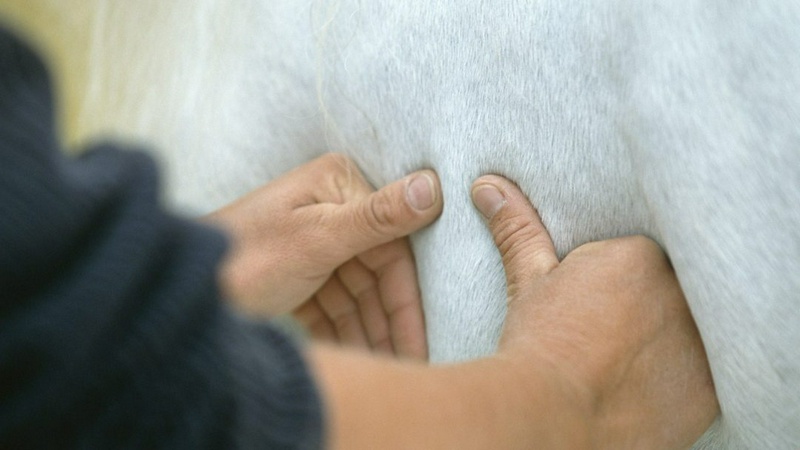
A9XPCE horse massage.
Horse owners have been reminded to use qualified and registered professionals when seeking musculoskeletal treatments for their horses.
Industry professionals have reported that the number of people providing treatment without sufficient credentials has increased.
In January, Defra held a consultation on reforms to the Veterinary Services Act that could include the regulation and protection of titles for related professions, including musculoskeletal therapists (news, 5 February).
Veterinarian Lorna Brokenshire-Dyke is a qualified veterinary physiotherapist and chair of the National Association of Veterinary Physiotherapists (NAVP).
Dr Brokenshire-Dyke told H&H that she has seen clients going to therapists such as chiropractors, massage therapists or physiotherapists instead of consulting a veterinarian, some of whom are operating without proper training and qualifications.
She said: “Therapists who have the appropriate training and qualifications can identify problems and refer to a veterinarian – but without that foundation, a horse may be treated repeatedly without the underlying problem being properly addressed.
” She added: “I have seen what happens when treatment is not based on proper training and qualifications: conditions are missed, problems are masked, and horses are pushed when they should be resting, and all of this is to the detriment of the animal’s welfare.
” Dr Brokenshire-Dyke cited a case in which a horse had been seen several times by a musculoskeletal therapist because of lameness – and only months later, when the horse had not improved, was she consulted as a veterinarian.
She said: “In the end the horse was in pain for months because the underlying issue was not being resolved, but the therapist was reassuring the owner that they were doing the right thing.
” She added: “The owner’s bank account was affected, but more importantly, the horse did not receive the right treatment at the right time.
” Dr Brokenshire-Dyke added that any therapist should be prepared to be asked about their qualifications and insurance, and whether they are a member of associations such as NAVP, Register of Animal Musculoskeletal Practitioners (RAMP) or Association of Chartered Physiotherapists in Animal Therapy (ACPAT).
She said: “As a veterinary physiotherapist, I know exactly why the route to training and qualifications must be rigorous, not optional.
This is what gives a therapist true professional standing, the knowledge, judgment and responsibility that proper qualifications genuinely represent.
” Veterinary physiotherapist Emma Green told H&H that she has seen an increase in unqualified people advertising treatment services on social media.
She said: “For years, various treatment devices have been used in this industry and have delivered effective results, but increasingly we are seeing treatments being offered by unqualified people in situations where they are not appropriate.
” She added that, in her opinion, the industry is not regulated enough.
She said: “It is concerning.
I do not want to question anyone’s credibility; different types of therapy have their place in this industry, but if an owner is looking for a veterinary physiotherapist, they should go to a reputable list where individuals have been thoroughly vetted.
The main concern should be the horse’s welfare.
» Jo Paul, former chairman of RAMP and a chartered physiotherapist, told H&H that by using someone who is on a professional register or a member of associations such as NAVP or ACPAT, owners can be sure that person is qualified.
She said: “RAMP is a voluntary register; that does not mean that everyone who is not a member is not qualified, but it does mean that we have done the due diligence on the people on our register.
” She said: “Everyone wants the best for their horse, but owners should take some responsibility.
When someone comes up with a new gadget or suggestion, owners should consider whether the person offering that service has the anatomical, pathological and physiological knowledge needed to use that method safely and effectively.
” Source: Horse & Hound