Essentials of the horse first aid kit
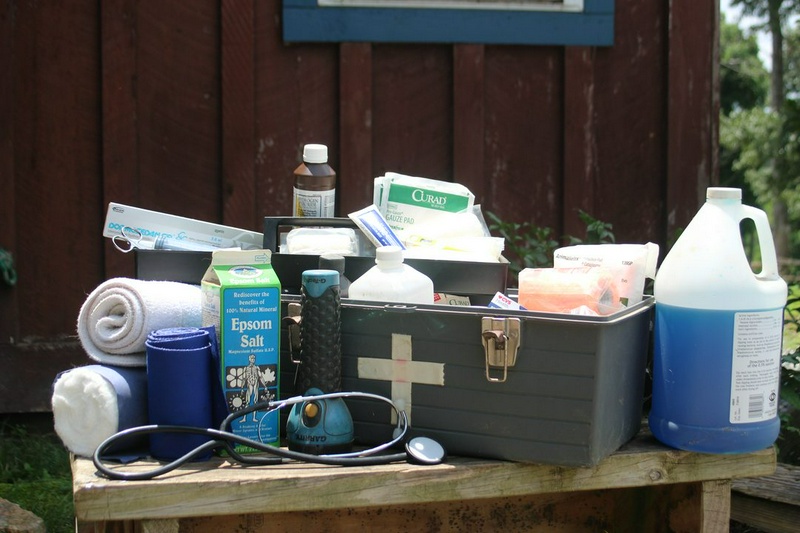
"If there's something that horses can get themselves involved in, they definitely will," jokes Samantha Burton Henley, manager of Sandy River Equestrian Center in Exton, Virginia.
The reality is the same; horses are usually prone to accidents and keep their caretakers constantly worried.
Although you can't keep your horse in a padded room or wrap it in a layer of bubble wrap, you can stabilize potential injuries as necessary until the veterinarian arrives by having a special equine first aid kit ready in an accessible location.
One of the reasons for dedicating a specific and complete container for first aid is that in an emergency situation for the horse, time is of the essence, and you shouldn't spend it searching for a thermometer, sterile bandage, or other essential items.
Henley explains: "Many times, it happens that it takes a while for the veterinarian to arrive."
Even if you only have one or two horses, you have likely gathered various supplies and equipment that are stored in different places.
If you have a box that you regularly check and update, you know you have what you need whenever you need something.
The main challenge in preparing this box is to ensure that it only contains items necessary for attending to your horse until the veterinarian arrives.
Extra products and replacement items for the box can be stored in a larger medicine cabinet or chest.
That is also a suitable place to keep a human first aid kit; a kit that can either be purchased ready-made or completed with simple pharmacy items like adhesive bandages, triple antibiotic ointment, aspirin, hand sanitizer, and similar items.
Henley and Sarah Feathers, a veterinarian at Great Valley Equine Veterinary Services in Bristol, Tennessee, have helped compile a list of items that should be in your first aid kit and are useful in emergency situations.
When gathering supplies and equipment, also consider the type of storage space needed.
The horse first aid kit should be portable, organized, and preferably have different compartments so that all medical supplies and necessary equipment for quick access in emergencies are well separated and stored.
A compact toolbox, a large fishing tackle box, or a plastic container with a tightly sealing lid are suitable choices.
Whatever option you choose, make sure it is clean, sealed, and waterproof so that its contents remain sterile and ready for use.
Also, keep in mind that in extremely severe weather conditions, it may be necessary to move the box to another location to prevent its contents from freezing or overheating.
Equipment In any emergency situation, having the right tools can make a big difference in achieving a successful outcome.
Basic items you should have on hand include: a flashlight with healthy batteries so you can effectively care for your horse in the dark night or in the dimly lit stable box, even in the event of a power outage; a rectal thermometer, the plastic digital type is safer in the stable environment compared to the common glass model and shows the number faster; a small jar of Vaseline or similar lubricant to help insert the thermometer; a stethoscope to check the heart rate and listen to gut sounds; a box of latex surgical gloves to help prevent wound contamination and keep hands clean; a roll of duct tape, very useful for hoof wrapping as it is waterproof and durable; bandage scissors with a rounded tip so you don't cut your horse when removing bandages; a hemostat or tweezers, very useful for removing splinters or ticks; wire cutters to free a horse from a fence; a sharp pocket knife for when a horse is tied but has fallen in the trailer, is tangled in cross ties, or has its foot caught in a hay net; a cold compress to reduce swelling from injury.
A chemical "instant cold" pack is very useful when ice or cold water washing is not available (if possible, it can be wrapped around the injured area), although you can also invest in an ice wrap or ice boot specifically for horses.
A clean bucket for soaking bruised or abscessed hooves or washing wounds; a clean bath towel to use as a compress on large wounds or to spread as a sanitary surface for small items; a chain shank twitch/extra lead rope/extra halter; a first aid notebook; 60 cc dose syringes with catheter tips for administering oral medications, as well as 10 cc syringes and subcutaneous needles for injections.
Wound treatment Horses may suffer from various types of wounds, and whether the situation requires immediate contact with a veterinarian or you can treat it yourself at home, you need items that clean and disinfect the wound quickly and gently.
These items include: a 16-ounce bottle of antiseptic cleaning solution like Betadine (povidone-iodine) or Nolvasan (chlorhexidine) for washing and disinfecting the wound; a 16-ounce bottle of hydrogen peroxide (useful for cleaning dirt or other contaminants from the wound); wound antiseptic cream, powder, or spray to prevent infection and aid healing; however, always consult a veterinarian before using any product after cleaning the wound.
A 16-ounce bottle of rubbing alcohol for sterilizing tools like scissors or thermometers; a pack of pre-moistened alcohol pads for cleaning small wounds and injection sites; a 10-ounce bottle of saline solution—a contact lens solution bottle with a nozzle is suitable for this purpose—for washing delicate and hard-to-reach wounds, such as areas near the eye; a small tube of triple antibiotic ophthalmic ointment (non-steroidal) that can be obtained from a veterinarian.
Bandages Once the wound is initially cleaned, you need various bandaging materials to cover it and keep it clean.
You also need to have these items on hand to quickly stop bleeding; bleeding that, depending on its severity, may need to be controlled even before cleaning the wound.
Bandaging supplies include the following: a box of 200 non-stick sterile gauze, preferably in size 4 by 4 inches, for cleaning and covering small wounds; two rolls of self-adhesive bandage, like Vetrap, to keep the gauzes in place; a roll of Elastikon, a strong and stretchy fabric tape with a rubber adhesive base; 4-inch gauze rolls for layering and padding; 2 rolls of cast padding; polyester padding for protection, comfort, and keeping the bandaged area dry; 1 to 2 rolls of absorbent sheet or Gamgee cotton, a type of cotton layer placed between two sheets of gauze.
Both of these are usually available in 12-inch sizes and can be used as an underlayer for bandaging or as a pressure pad to stop bleeding.
Cotton should not be placed directly on the injury, as it sticks to the wound.
It is also useful to have on hand for helping to clean the wound.
A clean set of towels and bandages for the outer protective and supportive layer on a wound that is already bandaged, or, when used with a poultice, to reduce heat and inflammation in the leg; 2 thick sanitary pads or diapers, which are useful for padding a bandaged hoof.
Bandaging supplies can be helpful in various situations, from a lost shoe to a serious injury.
© Adobe Stock Medications Depending on your experience and comfort level in administering medication, there are some medications that are good to have in your first aid kit.
Even if you have administered these medications before, always consult your veterinarian first.
If they can reach your horse quickly, they may not want you to administer anything so they can have a clearer picture of the problem.
Also, intravenous injection, meaning direct injection into a vein, can be dangerous if done incorrectly.
The good news is that many pain relievers or sedatives are now available in oral form.
Phenylbutazone, known as "Bute," and Flunixin Meglumine, known as "Banamine," are non-steroidal anti-inflammatory pain relievers.
Both are available in pre-measured oral paste doses, although Bute is also available in powder form and can be given orally.
Consult your veterinarian to determine the correct dosage.
Dormosedan gel is a mild standing sedative that is given orally.
Check the instructions for the correct dosage and be sure to wear gloves, as humans are sensitive to this drug and it can be absorbed through the skin.
Electrolyte paste for treating dehydration.
Although this is not a medication, it is an oral supplement that has proven effective in encouraging horses to drink water.
You may decide there are other items you want to add to your first aid kit.
Or you can buy a ready-made kit and save yourself the hassle of gathering the items.
Whichever you choose, know that the time and effort you put in now will help you better assist your horse while waiting for the veterinarian to arrive.
Communication with your veterinarian is key No matter how complete your first aid kit is, these supplies should never replace contacting your veterinarian in an emergency; even when you are not sure if you are really facing an emergency situation.
Serious signs such as swollen eyes, sudden lameness or reluctance to walk, severe bleeding, respiratory problems, and signs of colic (such as pawing at the ground with a hoof, depression, excessive sweating, and similar cases) always require an immediate call.
Fedrz says: "My personal preference is always a phone call.
This does not mean that the veterinarian must come to the location.
Just explain the symptoms.
If you can handle it yourself, great.
If not, I'll come.
" 6 things to do before an emergency situation: Post your veterinarian's and farrier's emergency contact information in the stable and also save it on your mobile phone.
Know how to measure your horse's body temperature, pulse, and respiration rate, and be aware of the normal values of these vital signs at rest.
Henley says: "We record the resting temperature, pulse, and respiration for each horse in the stable, and this information should be available in every stable or in a notebook.
" Check the first aid kit every month and dispose of expired medications and replace them.
Replace anything you take from the first aid kit at the first opportunity.
Increase your knowledge.
Make sure you know how to use everything in the kit or ask your veterinarian to show you these items.
Practice bandaging your horse's leg before facing a stressful emergency situation.
Keep your horse's health records up-to-date and accessible so you can answer any questions your veterinarian may have about its medical history.
This article was first published in the August 2018 issue of Practical Horseman.
Source: Practical Horseman – Health