Ted Coffin explains; how and why to ride in a forward seat
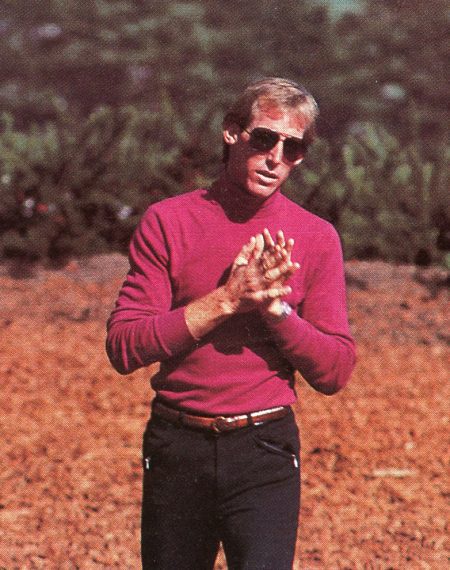
Ted Coffin, Olympic gold medalist in eventing, explains everything you wanted to know about the forward seat. In the twentieth century, with the efforts of Caprilli and cavalry schools to move faster on cross-country courses, the forward seat was formed.
This method was designed to be more balanced, athletic, and in harmony with the horse's movement.
The forward seat is one of the few modern developments in all riding styles.
Essentially, it is a sitting position developed to adapt to the horse at higher speeds; to accompany a horse moving at 350 meters per minute.
The fundamental idea of what we do in the forward seat is based on the principle that practice means breaking down the components of a movement and working on each component in the form of a few simple and executable exercises.
If we wait until we are going at 350 meters per minute to practice the forward seat, then we either have to do a lot of galloping or be inherently very capable riders.
What I do in my clinics is slow down the work speed in the forward seat.
This way, we can practice the forward seat at the walk, trot, and canter; at a stage where we do not yet need the forward seat.
We work at lower speeds to achieve basic understanding, basic balance, and basic flexibility in the forward seat.
The interesting part of the forward seat is that the forward seat, deep seat, and rising seat are more similar than different; because they are all based on balance.
You cannot remain balanced on the horse's back in the deep seat, rising seat, and forward seat unless you have a fundamentally similar position.
Bert de Nemethy always says he doesn't understand all these concepts about different seats because, in his view, there is only one seat, and that is the seat where the rider is in balance and can communicate with the horse.
In the process of working on the forward seat, we do not separate ourselves from the concept of the deep seat or rising seat.
In fact, we reach three different forms of a single balance and use each one to measure and assist the other.
For a rider's deep seat, nothing is better than the athletic needs and flexibility of the forward seat.
This relationship is also true in reverse; if a rider's deep seat is very good, transitioning to the forward seat should not be difficult.
It is important not to think of the forward seat as just a physical position; it is important to consider the forward seat as a type of balance that can change according to the balance needs of the horse.
The balance we have in the forward seat at the walk is very different from the balance we have when galloping on a cross-country course.
Its appearance is different; it has a different angle relative to the vertical line, the stirrup length is different, and the thigh angle becomes slightly more closed, but the feeling of being in balance is the same.
The value of the forward seat for slow work, trotting, and going over cavaletti is that the rider in this position does not have to worry about maintaining balance while flying with the horse's movement.
If we approach an obstacle in the forward seat and have good balance, it becomes easier to develop a sense of timing for when to bend at the hip joint and when to accompany the horse's movement in the air.
The forward seat is often a more balanced and relaxing position for horses to jump because they do not have to worry about whether the rider is balanced or not.
The forward seat is a very good exercise for Thoroughbred horses that do not have a very strong back.
A good forward seat in trot or canter is a very relaxing exercise for the horse's back.
It is important to know that the transition from a deep seat to any degree of forward seat should be very easy for the rider.
The rider should feel balanced and be able to easily change this balance; separate more from the saddle, lean more forward from the pelvis, or stay closer to the horse's back.
This becomes a way of riding on the course that does not limit the rider but gives them more freedom to be in the right place at any moment.
If there is a part of the course between two obstacles that requires moving forward, they can separate from the saddle more easily; if there is a turn that requires a bit of collection, they can return to a vertical position again...
But there should never be an awareness and sense of shifting from one seat to another.
One of the most important principles of working in a forward seat is the correct length of the stirrup.
Attempting to execute a forward seat with stirrup leathers so short that you feel suspended above the saddle is impossible.
Similarly, attempting to execute a forward seat when the stirrups are too long and you cannot distance yourself from the front of the saddle is also impossible.
Attempting to execute a forward seat on a horse that is completely above the bit and you have no control over it is also impossible...
Just as having any other good seat in that situation is not possible.
It is important that the horse is calm, moves in a suitable body frame, responds to your legs, and is ready to move forward and respond to leg pressure.
The length of the stirrup and the quality of the horse's movement are very important prerequisites for the forward seat.
Another important criterion is the length and adjustment of the reins.
When you move from a deep seat to a forward seat, you always feel a slight change in the length of the reins because the body comes slightly forward from the vertical position.
When we move in a forward seat, we must maintain the same conversation with the horse's mouth that we had in the deep seat.
The hands should not be so low, open, and with completely straight elbows that they encourage the rider to fall forward.
Similarly, the hands should not be so high and back and placed on the chest that you cannot easily maintain your balance with the horse's movement.
How you move from a deep seat to a forward seat is also important.
Many people, when moving from a deep seat to a forward seat, instead of allowing the knees and thighs to slide down, lock their knees and try to push themselves up with the pressure of the thigh muscles.
If you bring your knees down, coming out of the saddle becomes very easy.
The last very important point in riding in a forward seat is the focus and balance of the rider's eyes and head.
Going into a forward seat with a downward gaze, so that the rider is immersed in the horse's neck and the balance of the head is tilted forward, makes finding balance in this position impossible.
Interestingly, in Sally Swift's clinics, which are essentially focused on dressage, she suggests that one of the very good exercises for developing a deep seat is for the rider to ride in a forward seat; not because exactly the same set of muscles is engaged, but because the forward seat enhances the rider's sense of balance.
This position is somewhat a more serious test to assess whether you are in balance or not.
In a deep seat, it is difficult to determine whether you are staying on the horse purely by relying on your balance or due to gripping, using the saddle bowl, or taking help from your hands.
In a deep seat, it is very hard for beginner riders to know what their balance really is.
Unfortunately, there is no way to develop a good forward seat other than continuous practice.
However, there are a few very good exercises to help with this.
First, feel comfortable on a very calm horse and then perform the forward seat criteria in a standing position.
Feel your ankles are relaxed and your heels are down and deep, your lower leg is close to the horse's side, and your knees are in place without pressing or gripping tightly.
Your thigh is close to the horse; you are neither standing above the pommel of the saddle nor sitting back on the saddle bowl.
Just practice this in a standing position; this becomes exercise number one.
Exercise number two is to do the same thing in a forward seat with both hands open to the sides at the walk.
This is a very good test for balance; you can either stay in the same position or fall forward or backward.
In the walk and trot, you don't need to get too far from the saddle to be in a forward seat.
Now let's look at some problems that can disrupt balance in the forward seat.
Problem number one is the incorrect length of the stirrup.
The incorrect length of the stirrup can cause the rider to have to stand on the ball of the foot and straighten the knees to come out of the saddle.
Now look at the foot.
Problems can arise from the incorrect placement of the stirrup on the foot; being too close to the toe, too far down to the heel, the outer part of the foot not resting on the outer branch of the stirrup, the stirrup not sitting correctly diagonally on the foot so that it is higher on the outside and slightly deeper on the inside, too much weight falling down on the toes — which causes the heels to rise — or too much weight with a locked ankle falling on the lowered heels and taking the stirrup forward from the vertical line, too much weight on the outer part of the ball of the foot — which brings the toes inward — or too much weight on the inner part of the ball of the foot — which pushes the toes outward — or the asymmetrical growth and development of the rider's legs; so that one toe is out and one is in, or one heel is down and the other is up.
All of this might seem like we just want the rider to look good, but this perception is completely incorrect.
Everything related to body position is related to efficiency.
In the riding method I was taught, there is not even one position correction that is done just because "it looks better."
It just so happens that every correct body position performance also looks better.
This is just a pleasant consequence.
It's exactly like saying a horse that is on the bit is functionally more valuable and at the same time aesthetically more beautiful...
But you don't create this state from an aesthetic basis; it is the result of the horse being more rideable, the result of the horse moving in a way that is most efficient and functional for him.
The position of the ankle determines where the foot will be; therefore, as long as the foot is in the right place and the heel is deeper than the toe, the ankle's task is clear.
The only way you can maintain proper contact with the stirrup while moving is to have a flexible wrist.
You should connect with the stirrup the same way a skater connects with the blade they skate on.
A skater's wrists must be both very strong and very flexible.
If the calf rests gently on the horse's side, it can create varying degrees of closeness and be snug, then the calf's position is correct.
If we go higher along the leg, the next problem is riders who cling too much with their knees; this action moves the calf away from the horse's side and consequently, no communication with the horse occurs.
Or vice versa; the knee is too far from the saddle, the upper part of the leg has no contact, and there is only a clamp-like pressure with the calf, without the rider being able to adjust the calf's contact with the horse's side.
Bert de Nemethy always said: "You should be able to hold a pebble between your knee and the saddle.
" Not so tight that you chafe your knee and create a hole in it, and not so loose that you lose the pebble.
Another problem can be the rider's ability to adjust the knee bend; so that either the knee is forcibly too open, pushing the calves forward, or the knee is too bent, pulling the leg too far back.
The knee is one of those joints, like the elbow, that must be an alert and flexible joint, constantly making fine adjustments to maintain the correct line.
The position of the thigh should be such that it does not give the rider the feeling of rising towards a horizontal position; rather, it should create the feeling that the thigh is sliding downward.
In practice, the thigh cannot slide too far down, but the sense of movement should be downward.
We are looking for proper contact along the entire length of the thigh.
One of the most common problems we see in the forward seat is incorrect thigh pressure; either the thigh clings and grips too much, or it moves away from the saddle and turns outward.
The next problem we see is that the seat returns into the saddle; either falling back towards the cantle or coming forward onto the pommel.
In the forward seat, the rider's seat should remain suspended above the deepest part of the saddle.
Some riders lean so far forward that the area between their legs rests on the pommel.
Some riders either do not want to separate from the saddle enough or feel they cannot rise from the saddle due to poor balance.
Conversely, there are riders who separate too much from the saddle and practically stand above it.
A problem can arise when the body's angling relative to the vertical line is excessive.
Another issue may arise; even when the rider is at a good angle, but their back is too rounded or conversely, their back is too hollow and arched.
The back should be straight.
Some riders look down instead of forward, which causes a problem.
When the elbow is not slightly ahead of the body and instead is in the middle of the body or slightly behind, the rider creates a problem.
Serious problems arise for riders whose elbow joint does not act as a regulator between the horse's mouth, the rider's hand, and the elbow itself.
Another issue is stiffness in the shoulders, which causes the elbow to form a right angle with the body and consequently not bend and extend properly along the body line.
All these flaws and defects, which seem small in appearance, are important because when working in the forward sitting position, we must be in balance with the horse, neither ahead of the movement nor behind it.
And we need to know what these balances feel like and what their consequences are.
If you are ahead of the movement, it creates the feeling that the rider's body mass is gathered on the horse's shoulders, or that the rider is leaning on the horse's shoulders to maintain their balance.
This situation usually occurs when the rider's heel comes up and the legs slide back; the angle behind the knee is overly bent, too much weight falls on the inner knee, and the knee clings too much to the horse.
In this situation, the seat seems to be positioned on the front of the saddle, the hands appear low and open, and the back tends to round and gather over the position of the hands.
Being ahead of the movement is a very dangerous situation.
We know that being ahead of the movement is dangerous because what is called a "secure seat" is exactly the opposite; that is, the legs are firmly supported in front, and the upper body is fully inclined backward.
In that state, even if the horse coughed, you wouldn't fall off.
Being ahead of the movement is a very unstable situation.
Whenever the horse stops, at best you fall onto its neck, and at worst, you are thrown forward over its head.
Being ahead of the movement means the rider is not in a position to influence the horse; if you are ahead of the movement, you practically do not have control of the situation.
For the rider to be ahead of the movement, it is unlikely that their legs are anywhere near the horse's sides.
When the rider is ahead of the movement, it is unlikely that the horse moves forward for any reason other than anxiety or simply speed.
Another form of losing balance is falling behind the movement; a state in which the rider's legs are thrown forward, the heel drops excessively, and the back of the knee joint becomes overly straight.
In this situation, the rider feels their seat moving towards the back of the saddle.
The hands are usually drawn towards the rider's body as they try to use the horse's mouth to avoid falling too far back.
Falling behind the movement is usually related to too much weight on the heel, overly straightening the back of the knee, and not feeling that the pelvis moves along with the horse's movement.
One of the best criteria for feeling good balance in the forward sitting position is having continuous contact with the horse's mouth.
Most beginner riders, when they lack balance, cannot maintain this contact steadily; they either pull back or release the hand and fall onto the horse's neck.
If you can keep the contact completely even, this is usually a good sign of balance.
It is very important that whatever the rider does with their hands in the air, they do not repeatedly pull the horse's mouth; and to prevent this, they can hold the horse's mane or a strap around the neck.
.
.
or release on the neck.
In my opinion, if a rider has a dressage background and has made it a way of life to maintain contact, continuously communicating with the horse's mouth, then if this same rider is also very comfortable in the forward seat on the ground, maintaining good contact and being very soft and flexible in the arms, the need to use the mane release will be very minimal; if at all necessary.
Such a rider should easily develop that tactile sensitivity to follow the horse's mouth well.
If you need to use the mane release for a while, I would say you have gone to jumping before you are ready.
Another test of balance in the forward seat is to trot and canter over a pole on the ground and maintain that same good contact.
In fact, one of the best ways to teach balance is to practice the forward seat over cavalettis, over poles, on short uphill slopes, on gentle downhill slopes, in turns, and in changes of direction; until the rider feels completely comfortable and in control at all times to make those very subtle and small adjustments necessary to maintain balance in the forward seat.
In all these exercises, the criteria remain the same as before.
This is what makes working with the forward seat appealing; if the basic principles are correct, usually no new problems arise, only the old problems reappear.
Joe Fargis and Mel Pearl, one of the main ideas in the forward seat is that nothing should change except the angle of the hip joint.
The rider does not need to change their connection with the stirrup, nor do they need to change their leg or knee.
.
.
All they need to do is close the angle of their hip more to follow the horse's movement.
If you look at photos of the best riders, the classic riders, like Nelson Pessoa, Conrad Homfeld, and Joe Fargis, when they are jumping very large obstacles, there is an incredible sense of balance, calmness, and closeness to the horse.
Perhaps their leg has moved back five to seven centimeters, which is completely understandable when the horse makes such a tremendous effort, or perhaps they have risen slightly more from the saddle, but essentially the forward seat has not changed.
The foundation of the forward seat is that it is very economical in movement.
The forward seat does not require a large range of motion or sudden changes in balance from the rider; and any showy and exaggerated movement does not help the Thoroughbred horse remain calm when jumping.
Thoroughbred horses usually interpret any extra movement from the rider as a cue to go faster.
The goal of the forward seat is to develop a style that is in complete harmony with the temperament of the Thoroughbred horse.
Read more from Ted here Source: The Horse Magazine