The correct position of the rider in the saddle and the reason for its importance
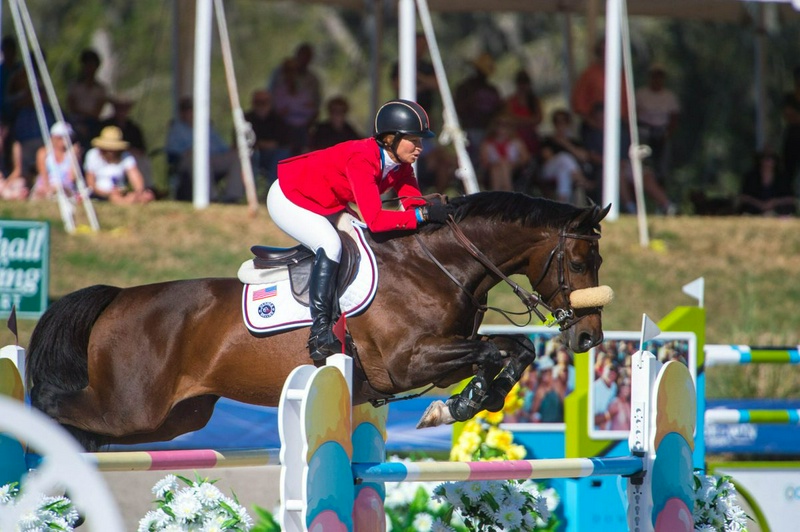
The correct body position of the rider and the impact this position has on the horse is one of the fundamental principles of riding.
I have spent a large part of my professional career building a strong body position for myself and transferring that to my students.
There are many reasons why the correct position is important, as well as ways you can assess and improve your position.
What is the correct body position of the rider?
A strong body position is fundamentally important because it provides your base of support on the saddle.
In a standing position or while walking, your position starts from the foot and how it is placed in the stirrup.
I prefer the stirrup to rest on the ball of the foot.
The outer branch of the stirrup should be slightly ahead of the inner branch; this is a safety point so that the feet can quickly exit the stirrups.
The heel should be down, and the toe should turn slightly outward.
Your foot's contact with the horse should start from behind the ankle and the calf.
At the knee, you should have an appropriate angle, around 90 degrees; with light contact but without squeezing.
This contact continues along the rise from the foot, through the thigh as well.
Beezie Madden on Breitling LS demonstrates how a strong body position provides the rider's base of support on the saddle.
A good way to test your foot position alone is to be in a two-point position while standing still, or during a walk or canter.
If your foot is in the right place, you should be able to maintain your balance while standing on the stirrups without falling forward or backward.
In my "Jumping Clinic" column in Practical Horseman, I sometimes see riders whose feet are positioned too far forward.
For these individuals, maintaining balance in the two-point position is difficult because being too far forward with their feet takes them behind the center of gravity and causes their seat to constantly return to the saddle.
As a result, they always have to work to keep their seat away from the saddle.
On the other hand, if a rider pulls their legs too far back, they will also struggle to maintain balance in the two-point position.
This excessively rearward foot position pushes their balance forward because it is positioned ahead of the center of gravity.
Your seat bones should be centered in the saddle, and your lower back should have a slight curve so that your seat and pelvis are pushed slightly toward the front of the saddle.
Think of this position like sitting on a bar stool, not sitting in a chair.
The angle of the pelvis should be open so that your body remains largely upright in the saddle.
The shoulders should be back, and your gaze should be upward.
The neck should also be aligned with the spine and not bent forward.
The hands should be slightly higher and further forward than the horse's withers; therefore, the reins should be short enough for the hands to naturally maintain this position.
The thumbs should be slightly turned inward; neither completely flat nor vertical like a bulldozer driving position, but slightly inclined inward.
With riding at different gaits, the angle of your pelvis changes.
For example, in a sitting canter, the angle of the pelvis should be slightly tighter.
In a counter canter, the angle of the pelvis is relatively open; not as much as when the horse is standing or walking, but more open than in a sitting canter.
In the two-point position or Chaharnal, the angle of the pelvis becomes tighter than in a sitting canter.
Except for the time you sit in the counter position in the saddle, the faster the pace, the tighter the angle of the pelvis should be.
The importance of the correct position of the rider throughout the history of riding and horse training has led skilled riders to conclude that the best position is one that allows them to communicate with their horse in the most effective and least intrusive way.
If your basic principles are correct, you will have the best communication with your horse.
Maintaining the correct position also gives you the most stability in the saddle while allowing for the greatest softness and consideration.
For example, when a rider is in the wrong position—leaning too far forward, sitting on the horse's neck, and such—because they lack a proper support, they are much more likely to pull on the horse's mouth or reins to maintain balance.
Therefore, the correct position is not only right and essential for you as a rider but also for your horse.
Otherwise, your communication and aids will not be smooth and effective.
For me, no matter how much weight training I do, I am still not going to have the physical strength of some male riders.
However, I have always been referred to as a powerful rider.
I think the reason is that I always strive to maintain the correct position and basic principles so that I can communicate effectively with any horse.
Whether I am riding a Thoroughbred or a powerful Warmblood, I can perform effectively with both types of horses.
Safety matters. Another important reason for having the correct body position is safety.
If you find yourself in a vulnerable position—such as when your horse stumbles and you are leaning too far over its neck—you are likely to fall off over its head or at least seriously lose your balance.
If the horse suddenly stops or bolts, you either get caught further forward on its neck or fall to the ground.
In the wrong position, your communication with the horse also becomes harsher.
If you find yourself leaning forward and need to slow the horse down, you will have to rely solely on the reins—and are likely to pull on the horse's mouth—instead of being able to use your body position as leverage.
Another common issue with body position is when the rider's leg goes too far forward and their seat stays too far back.
In such a position, you can no longer effectively use your leg and seat on the horse when it needs encouragement to move forward.
The harsher your aids are and the more you shift around in the saddle, the more distracting it is for your horse—and the safety of both of you decreases.
What we do is a focus game for both the horse and the rider.
The less your body position disrupts the horse's work and the less negative input it receives from you, the better it can focus on its task.
If you can only support your horse in the correct position, it can better concentrate on the next obstacle.
When the rider can only support the horse in the correct position, the horse will have the best focus on the next obstacle.
How I developed my body position. When I was young and learning to ride, I had very good coaches who emphasized the correct sitting and body position.
In my opinion, the correct body position does not come naturally to anyone.
Just like any other sport, this is something that you need to cultivate and continuously work on even as you get older.
It is very easy to fall into bad habits that have developed over time for any reason.
For this reason, it is helpful to have someone on the ground to coach your riding or film it to ensure that your fundamentals are correct.
In my opinion, the equestrian sections in the United States have helped riders develop the right fundamentals and techniques that perhaps some riders in Europe do not learn to the same extent.
The United States has a strong backing of riders who have succeeded and enjoy what they do because they have the right foundations; foundations that allow them to ride various types of horses and courses.
Common mistakes in body position The most common mistakes in body position are that the rider's foot goes too far forward and the rider sticks to the horse with their knees.
Practicing the two-point position I suggested earlier is very helpful in correcting these mistakes.
Riding without stirrups is also extremely effective for developing a strong and independent seat as well as stabilizing the correct foot position.
Riding without stirrups is an excellent exercise for developing a firm and independent seat and also stabilizing the rider's foot position.
Another common mistake in body position is keeping the hands too low; both on the ground and when jumping obstacles.
When a rider pulls down with hands that are too low, the bit puts pressure on the horse's lower jaw; something that is not pleasant for the horse and is likely to cause resistance.
You might be able to lower the horse's head this way, but it is not fair to the horse and is also incorrect according to riding principles.
The horse must trust the rider's hands and be assured that the bit will not hurt them.
To keep the horse in front of you and ensure the bit stays in the correct place in the corners of its mouth, imagine your hands are positioned above the withers, while your elbows are slightly in front of your body and the reins are short enough to maintain this position.
There should always be a straight line from your hands to the horse's mouth.
Whenever the horse's head goes up and down, the height of the hands should also change accordingly to maintain this straight line.
Practicing the techniques of very successful riders who have had issues with their body position has been beneficial, but I believe their success has come despite these weaknesses, not because of them.
Most likely, they have succeeded for other reasons.
Perhaps they compensated for their positional weaknesses with good timing and a good feel for the horse.
Or maybe they were physically capable enough that maintaining balance with the horse came naturally to them.
However, when there is a flaw in a rider's body position, it is not something that others should model after.
Ultimately, riding with the correct body position means being responsible for the horse — and probably the fastest way to achieve goals and gain success is the same.
In every sport — from golf and basketball to tennis — athletes constantly practice technique, technique, technique.
We too in the sport of riding must do the same to improve our ability to work correctly with these living and feeling animals.
Ultimately, riding with the correct posture helps you be responsible for your horse, communicate clearly and effectively with him, and create a safer environment for both of you on the path to achieving your riding goals.
Just as athletes in other sports continuously work on technique, riders must also regularly practice technique to improve their performance with their horses.
At E-Plus, from short educational tips and step-by-step videos to exclusive access to clinics and private lessons, you can learn from the top specialists in hunter, show jumping, eventing, equitation, and dressage at Equestrian Plus.
About Beezie Madden: Beezie Madden won team gold medals at the Olympic Games in show jumping with Authentic in 2004 and 2008, and also earned an individual bronze medal in 2008.
In 2013, she became the FEI World Cup Jumping Final champion with Simon, and in 2018, she won with Breitling LS.
Other honors include a team silver medal at the 2016 Olympic Games with Cortes "C," the horse with which Beezie Madden also achieved team and individual bronze at the 2014 FEI World Equestrian Games.
In 2019, she won the prestigious CP "International" competition at CSIO Spruce Meadows and also earned the title of International Equestrian of the Year from the United States Equestrian Federation that same year.
She and her husband John operate at John Madden Sales in Cazenovia, New York.
For more information about Beezie Madden and her training tips, click here.
Source: Practical Horseman – Training